BILTONG TROUBLESHOOTING
That Light Bulb in Your Biltong Box Is the Problem
Getting jerky when you expected biltong? The fix is not the meat or the spice. It is the temperature inside your box.
KALAHARI KHABU
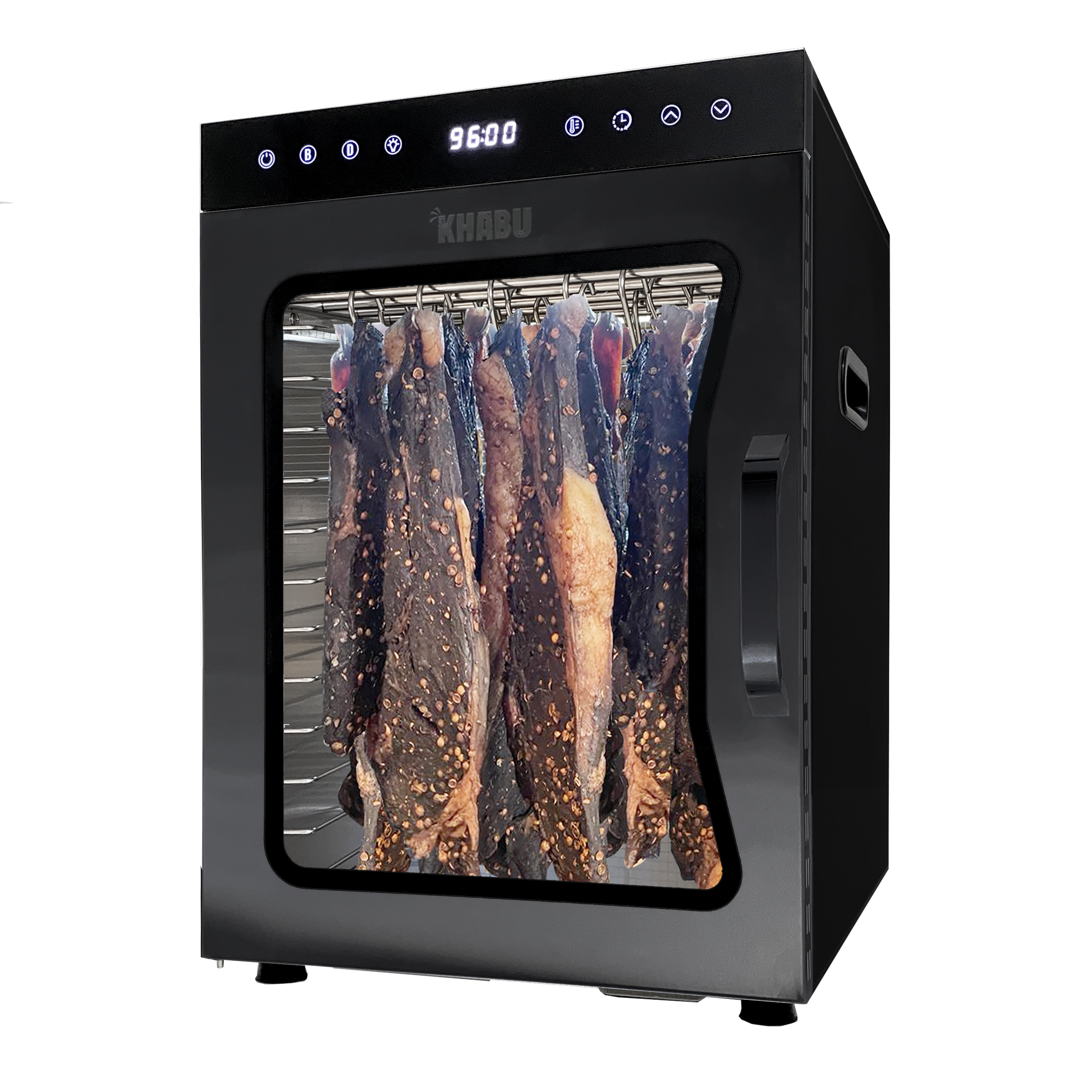
KK12 Biltong Boss $369
Free shipping across USA
Below 25°C — meat cures
Salt and vinegar preserve while natural enzymes slowly soften the fibres. That's biltong.
Above 35°C — enzymes die
Protein fibres seize instead of softening. Tough and flavourless, no matter the spice.
50–60°C — you're cooking
That's jerky territory. A light-bulb box in warm weather gets there without you knowing.
SOUND FAMILIAR?
You already tried this at home
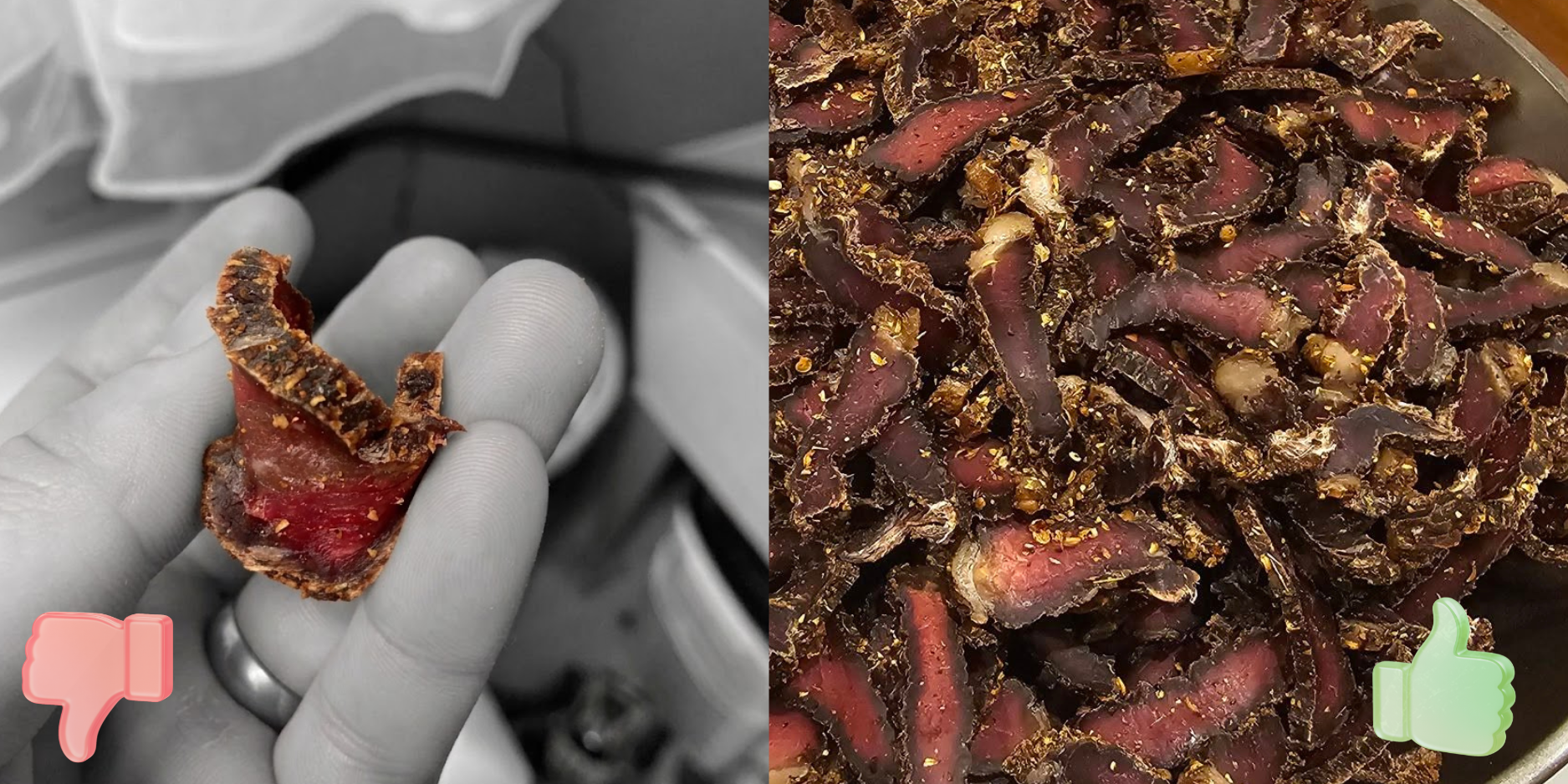
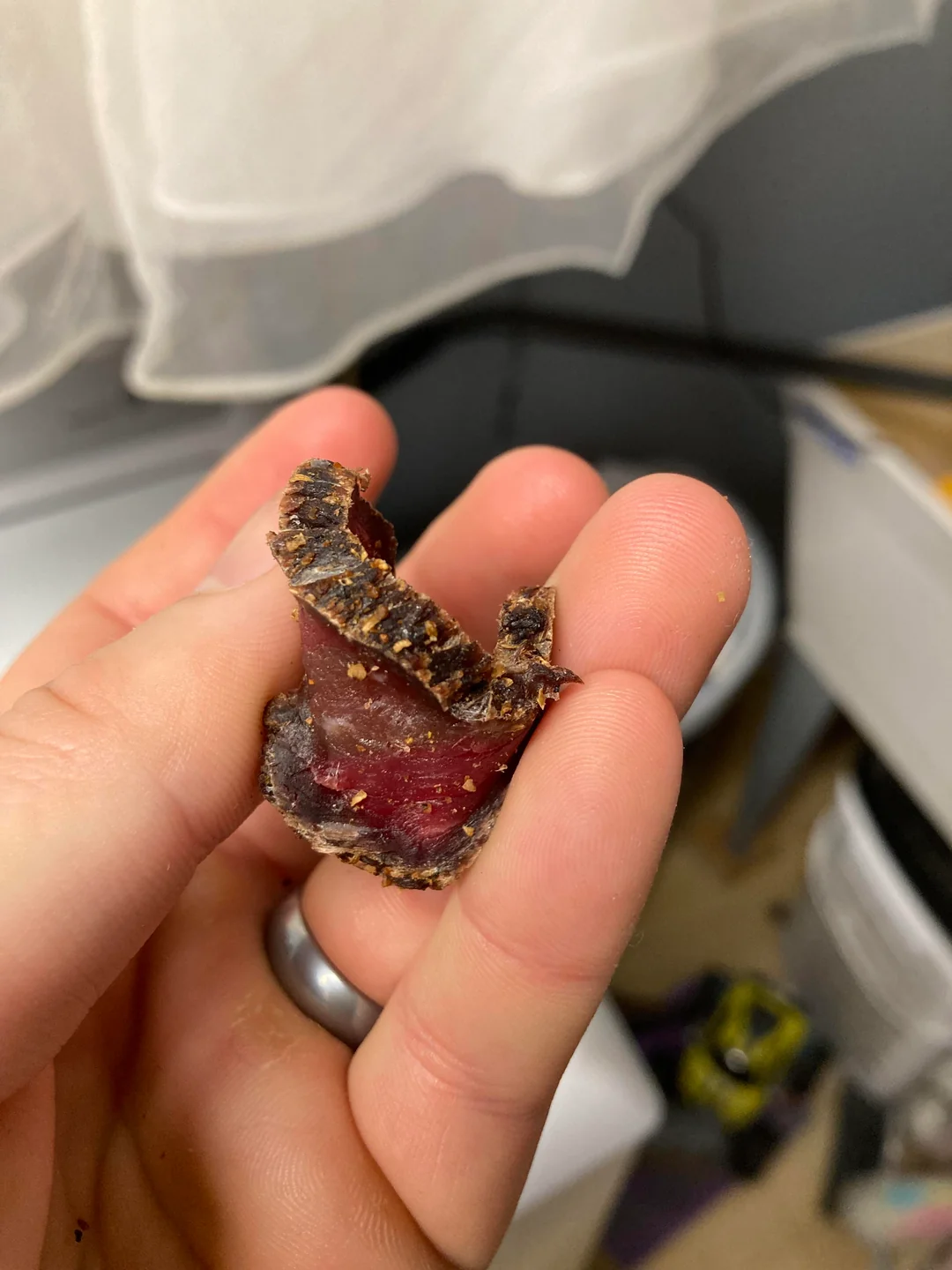
You bought a box. Probably a plastic one with a fan and a light fitting, somewhere around $120 to $140. You loaded it with silverside, rubbed the spice on, hung it up, and waited. Two or three days later you pulled out something dry, tough, and still raw in the middle. It looked like biltong. It did not taste like it. The worst part is once it gets this hard on the outside it can’t really be fixed and you have to start the whole process all over again.
So you tried again with thinner slices so it doesn’t come out so raw in the middle — but at that point is it really even biltong?
The problem was never your preparation. It was your setup. And depending on where you live around the world, fixing it isn’t that easy. There are too many factors at play. Seasonality, temperature, humidity, meat cuts, recipe ingredients all play a role. Worse yet, keeping these external factors consistent in a basic biltong box setup isn’t easy.
THE REAL CULPRIT
Why entry-level units get it wrong
Most entry level units sold as biltong makers in NZ are actually just dehydrators. They are designed for dry food like fruit through low temperature cooking. Biltong is about airflow and is defined as a cured product. That means applying direct heat changes the end product into something else entirely.
The other option is a diy set up with a small fan for airflow and a light bulb for warmth. No thermostat. No temperature control. The light bulb is a consistent heat source, and the internal temperature depends entirely on what wattage bulb you drop in and how warm the room is.
That’s a big problem in most parts of the world because the ambient conditions change. You can try to hide it in a basement (most people don’t even have a basement anyway) but that’s not going to ‘cure’ the problem for most people.
In practice, that means the air inside often pushes past 40°C at various points during the curing process. In warm weather, some users report temperatures closer to 50 or 60°C. At those temperatures you are not drying meat. You are cooking it. Then night hits and the temperature drops below 20°C. All the while the DIY set up can do nothing to combat these fluctuations.
And here is the part that really stings. You did everything right on your end. You cut thick strips the way biltong is supposed to be cut. You rubbed the spice, soaked the vinegar, hung it properly. But your box was running at jerky temperatures. Jerky is sliced thin so it dries fast under high heat.
You don’t have to worry about case hardening with thin cuts because jerky is a completely different snack! Your biltong strips are thick. At 50 or 60°C the outside cooks and hardens into a shell before the centre has even started drying. That is case hardening. The moisture gets locked in, the salt and vinegar never finish their job, and what you pull out three days later is tough, dry on the outside, raw on the inside, and tastes like nothing you were aiming for. Not jerky, not biltong. Just wasted meat and wasted time.
THE SCIENCE, BRIEFLY
The cooking line
Below about 25°C, meat cures. The salt and vinegar do the preservation work over three to five days while natural enzymes in the muscle slowly break down the fibres (Yebo, 2026). That breakdown is what gives biltong its tender, soft chew. The meat shrinks as moisture leaves, concentrating the spice and the fat into every bite.
Above 35°C, those enzymes die. The protein fibres seize up instead of softening. The heat drives the water out before the salt and vinegar can finish their work. That is why the result is tough and flavourless no matter how good your spice rub was.
Air dried, never heat dried
Traditional biltong has always been air dried. In South Africa it was made in winter, when cold, dry highveld air did the work over days. No bulb, no box — just mother nature and human adaptability.
A two-month window
That highveld window was about two months of the year. Outside of it, humidity or heat made every batch a gamble. That is the bar an authentic biltong chamber has to pass: highveld winter, on demand.
Sources: Yebo (2026); Wikipedia: Biltong.
THE CHECKLIST
What to look for in a biltong dryer
- Airflow-driven drying with no direct heat source.
- A thermostat that holds temperature between 20 and 30°C automatically.
- A thermo-regulated environment that keeps airflow consistent and insects out.
- Different sized units depending on how much biltong you want to make — that's the KK11, KK12 and KK16 in the Kalahari range.
- Food-grade stainless steel that will not absorb moisture or smell after six months of use.
AIRFLOW, NOT HEAT
That is what this machine does
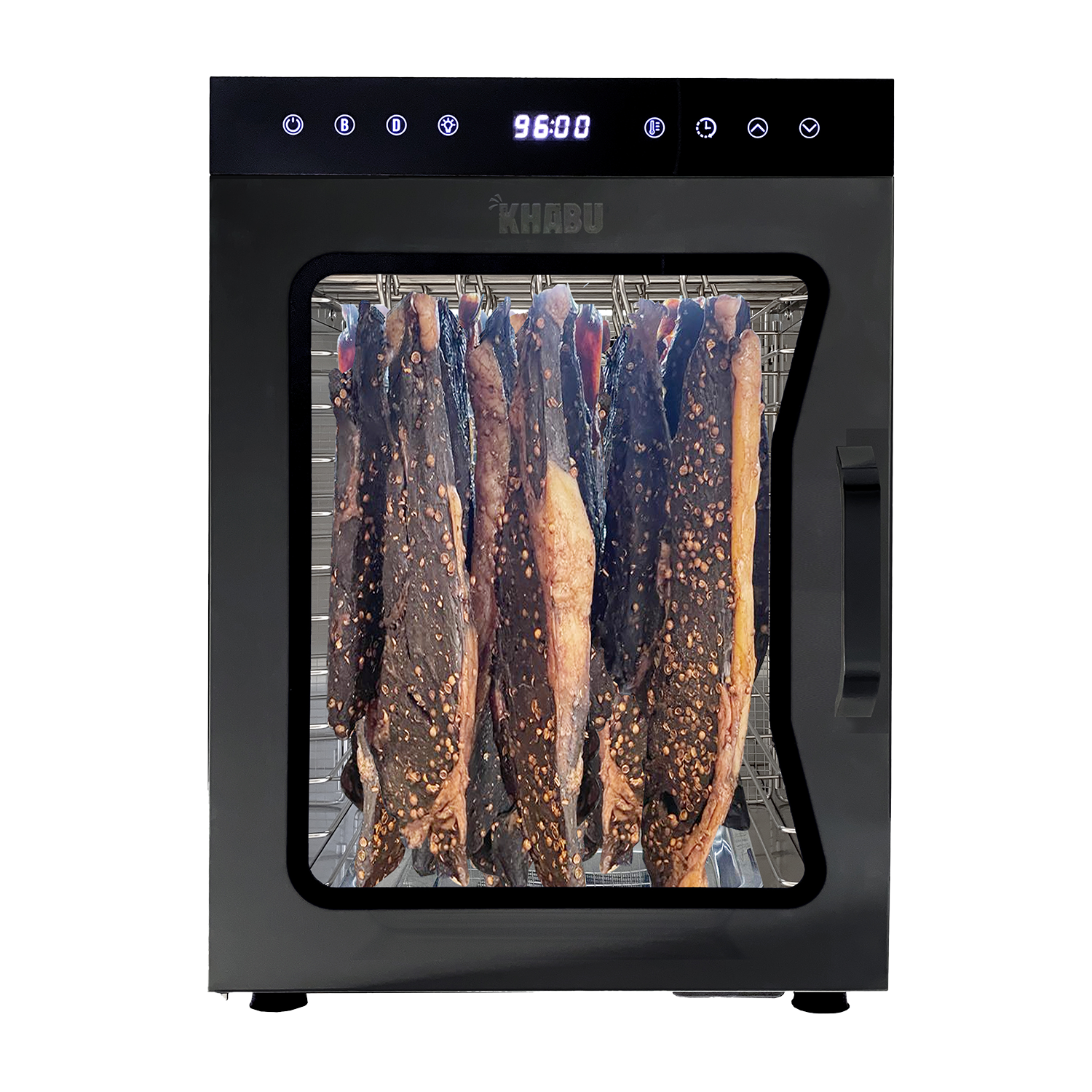
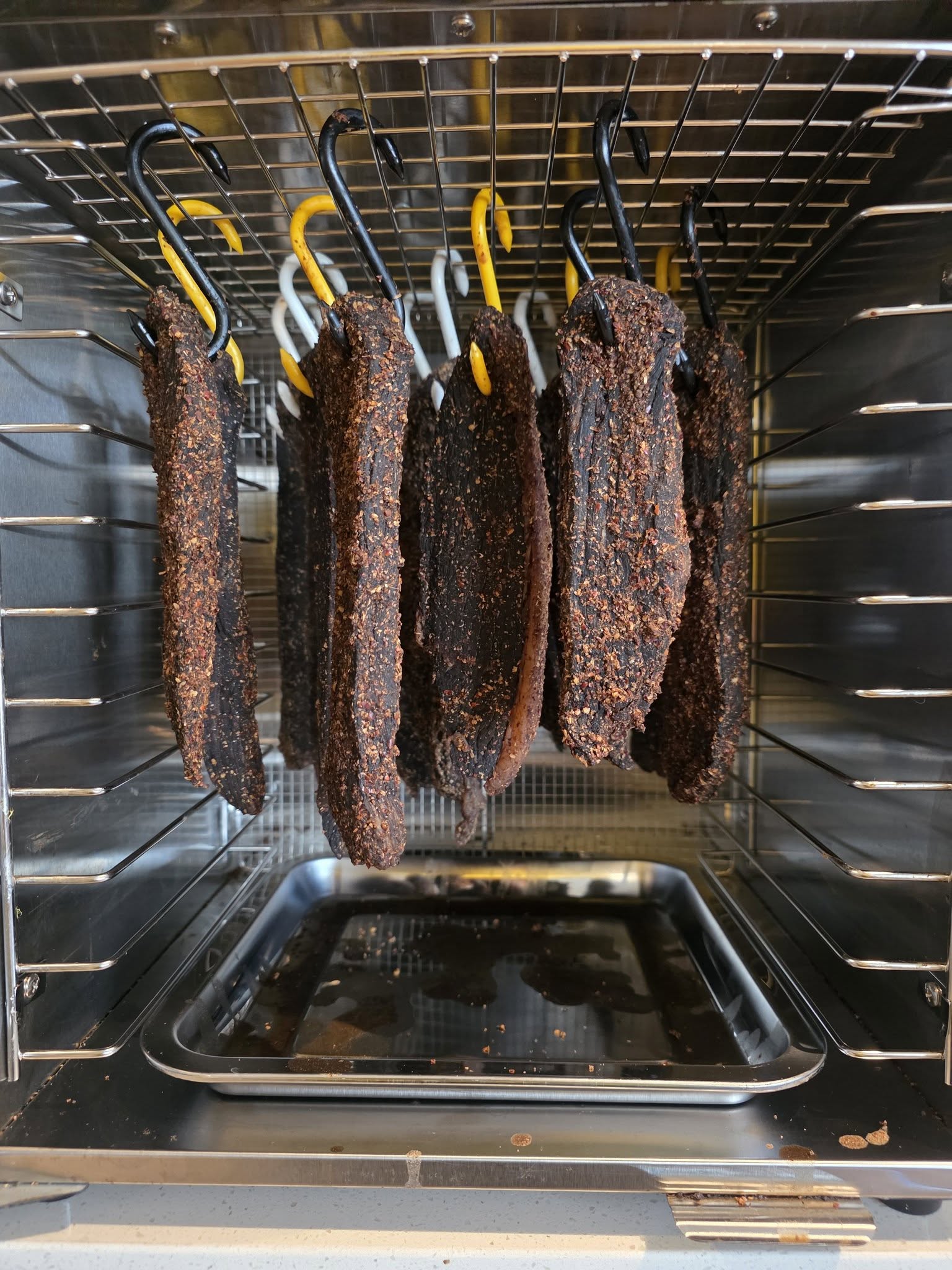
The KK12 Biltong Boss works on airflow, not heat. There is no light bulb, no element, no direct heat source. The fan moves air across the meat the same way the highveld wind did, and the built-in thermostat adjusts fan speed automatically to hold whatever temperature you set on the display. Set it to 25°C and it stays at 25°C whether your garage is 8 degrees in July or 28 degrees in February.
That is what separates it from a DIY setup. A box with a bulb is at the mercy of the room it sits in — which is why some people online swear their homemade box works and others follow the exact same build and never pull out a decent batch. The difference is not skill. It is geography, season, and a heat source nobody can control.
The KK12 removes all of that. If three days at 20°C is the sweet spot that gives you the biltong you grew up eating, you get that result every single batch. Summer and winter, same result. The stainless steel body does not absorb odour or moisture the way plastic does, and the sealed construction keeps dust and flies out while the fan circulates air evenly across 36 hooks. Set it to 25°C for biltong, or push it past 60°C when you want to make jerky, dry fruit, or dry out herbs.
DO THE MATHS
What one KK12 batch gives you
- 36 stainless steel hooks drying at the same time.
- 7kg (15lb) of raw silverside per load, yielding about 3.5kg (7.7lb) of finished biltong.
- A digital temperature readout so you can see what is happening inside.
- A premium food-grade stainless body that is easy to maintain in minutes.
- Flexibility to be used as a dehydrator for jerky, fruit and herbs.
A chamber is not a dehydrator
A KK12 is a biltong chamber which has dehydrator capabilities. A normal dehydrator is just a dehydrator: it cannot make authentic biltong.
One batch covers two to three weeks of snacking. The machine pays for itself inside a few months compared to buying shop biltong at $70 to $95 a kilogram.
TRY THIS TONIGHT
The 30-second temperature test
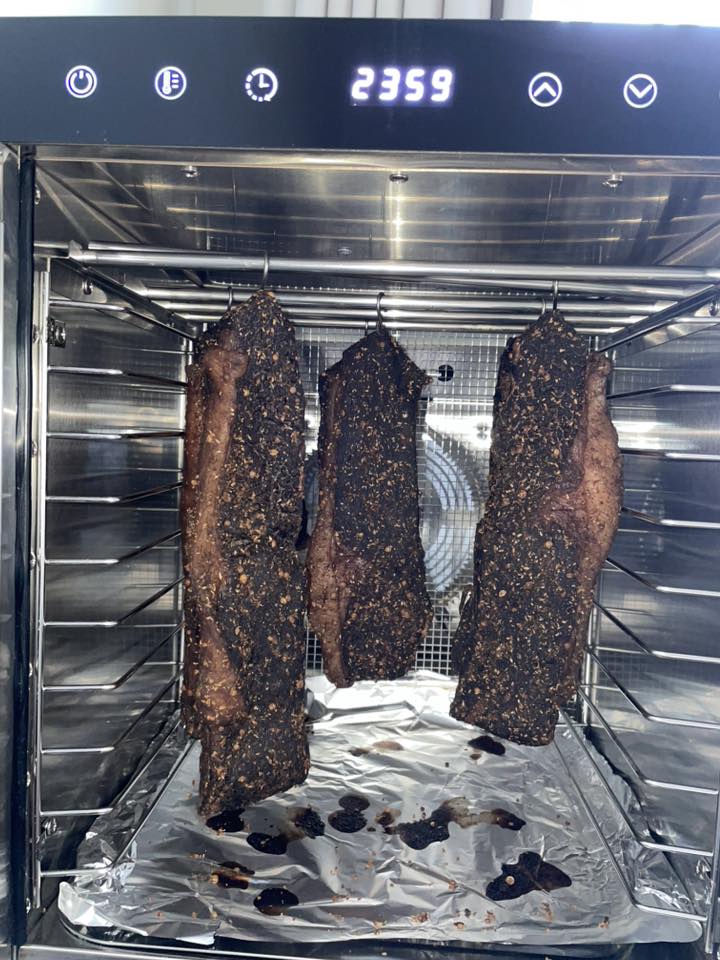
If you already own one of those boxes, try this before your next batch. Tape a kitchen thermometer to the inside wall, run the unit for two hours with the door shut and the light on, then read the number.
- Above 35°C: your box is cooking your meat.
- Below 30°C: you are in biltong territory.
Most people who run this test do not like what they find.
NO HARD FEELINGS
The honest part
A $129 plastic unit will still dry meat. If you want jerky, it works fine for that. But if you have been trying to recreate the biltong you grew up eating, or the biltong you tasted at a mate’s place and cannot get out of your head, the unit is not broken. It is running at the wrong temperature, and it was never built to run at the right one.

Stop cooking your biltong